Style
Industrial interior design
Industrial style comes from old warehouses and factory lofts: brick walls, metal frames and heavy wood. You do not need a loft to get the look. Here is what defines it and how it works in a normal room.
Try with 2 free designs
What is industrial interior design?
Industrial interior design is a style inspired by converted warehouses and factories. It combines exposed brick or concrete, black metal, reclaimed wood, leather and visible light fixtures. In a regular home, the look comes mostly from materials and colors rather than from real exposed structure.
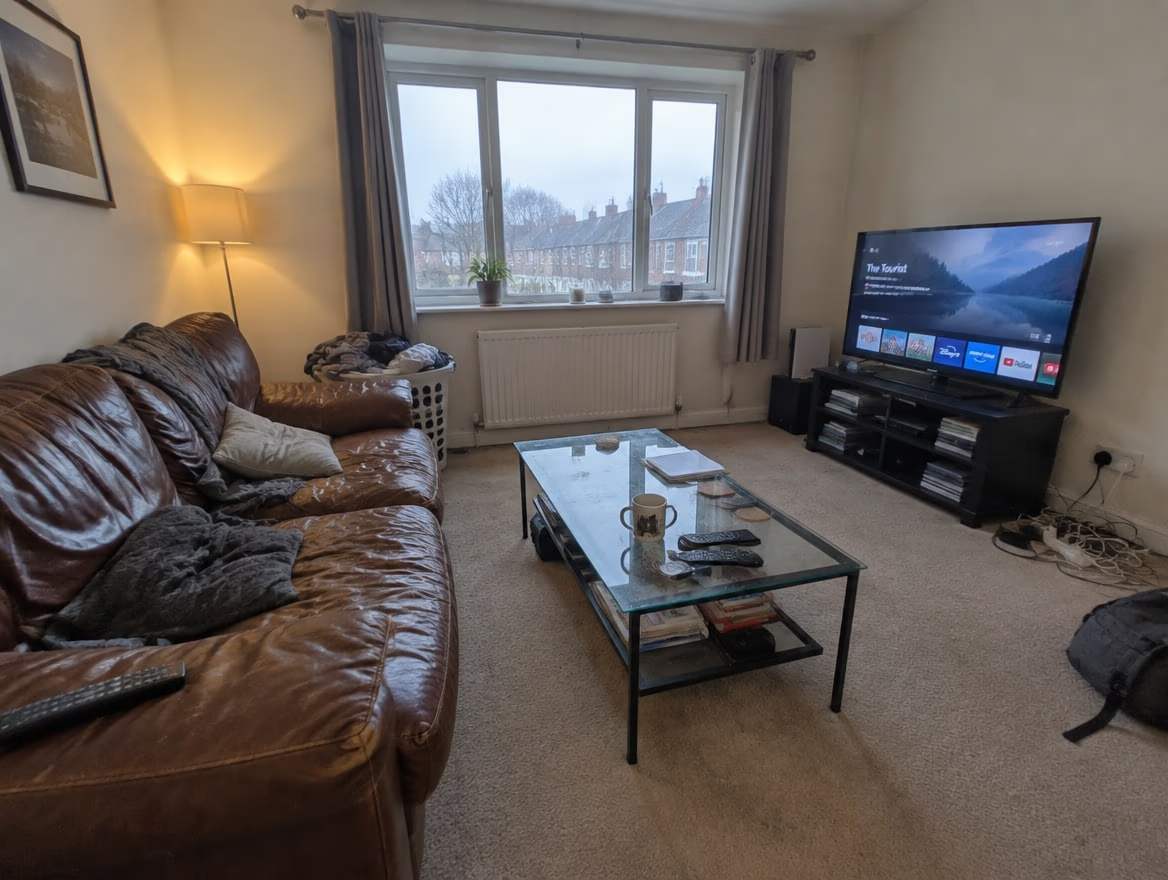
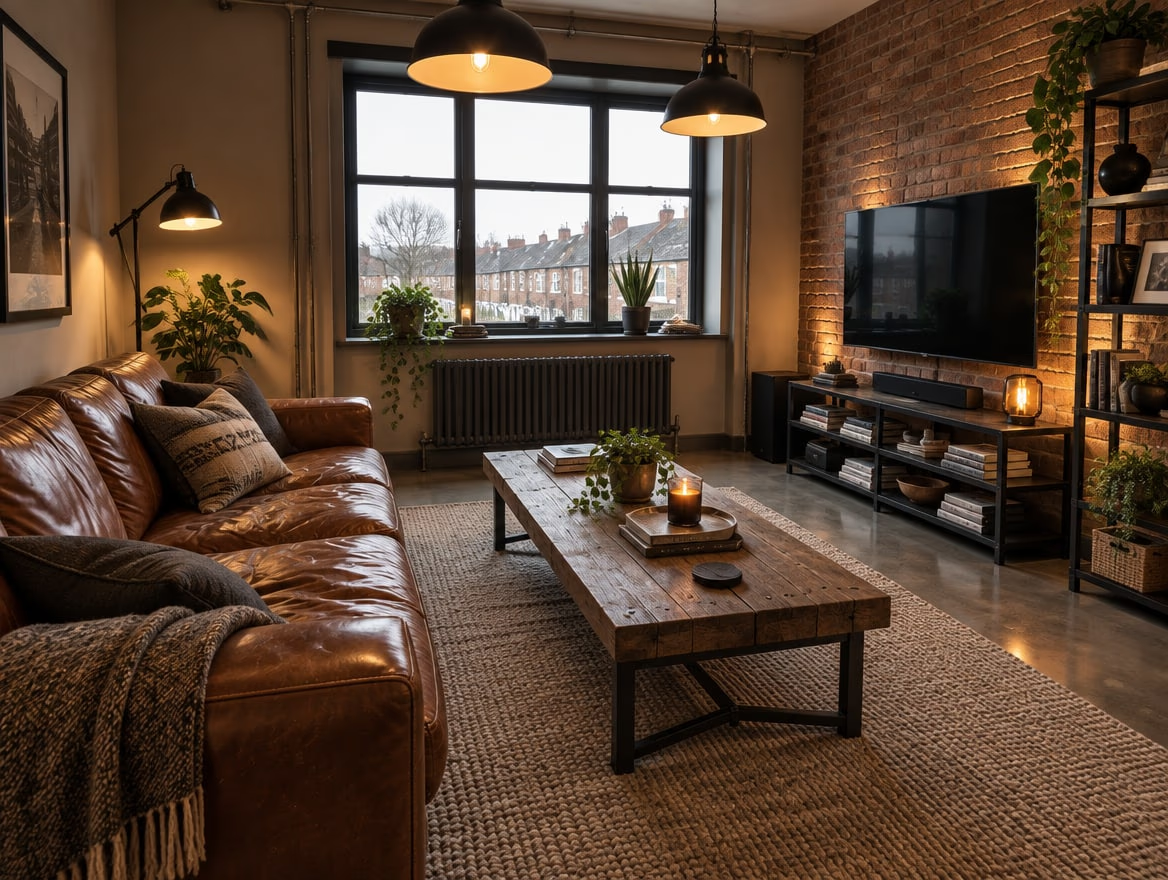
Same walls, same window, same camera. Only the design changed.
Key elements of industrial design
-
Black metal
Steel window frames, metal shelving, iron table legs and black light fixtures. It is the quickest way to make a room read as industrial.
-
Raw surfaces
Exposed brick, concrete or rough plaster. One feature wall is usually enough in a regular room.
-
Solid, reclaimed wood
Thick tabletops, wide plank floors and wood with knots and marks. It balances the cold metal.
-
Leather and heavy fabrics
A cognac leather sofa, canvas and wool. Materials that age well and look better worn in.
-
Visible lighting
Exposed bulbs, metal pendants and factory-style lamps. A few, not dozens.
- Color palette
- Charcoal, black and warm gray. Brick red and rust. Mid to dark wood. Cognac leather as the warm accent.
- Materials and furniture
- Exposed brick, concrete, black steel, reclaimed wood, aged leather, metal mesh and glass. Open shelving, metal-framed tables, leather sofas and armchairs.
- Watch out for
- Small, low rooms. Industrial style needs some space, and dark colors plus hard surfaces can make a small room feel tight and echoey. A big rug and curtains help soften the sound.
In the app this style is called Industrial.
How to get the industrial look
-
Start with black metal
Swap shelving, lamps or table legs for black metal pieces. This changes the feel of the room fast.
-
Add one raw surface
Choose one wall for brick slips, a concrete-look finish or textured plaster.
-
Bring in solid wood
Pick a reclaimed or rustic wood table, shelf or headboard with visible grain.
-
Soften with leather and textiles
Add a leather sofa or chair, a large wool rug and heavy curtains so the room stays comfortable.
-
Preview it on your room
Take a photo and apply the Industrial style in RoomGPT to see brick, metal and wood on your own walls first.
Industrial ideas, room by room
-
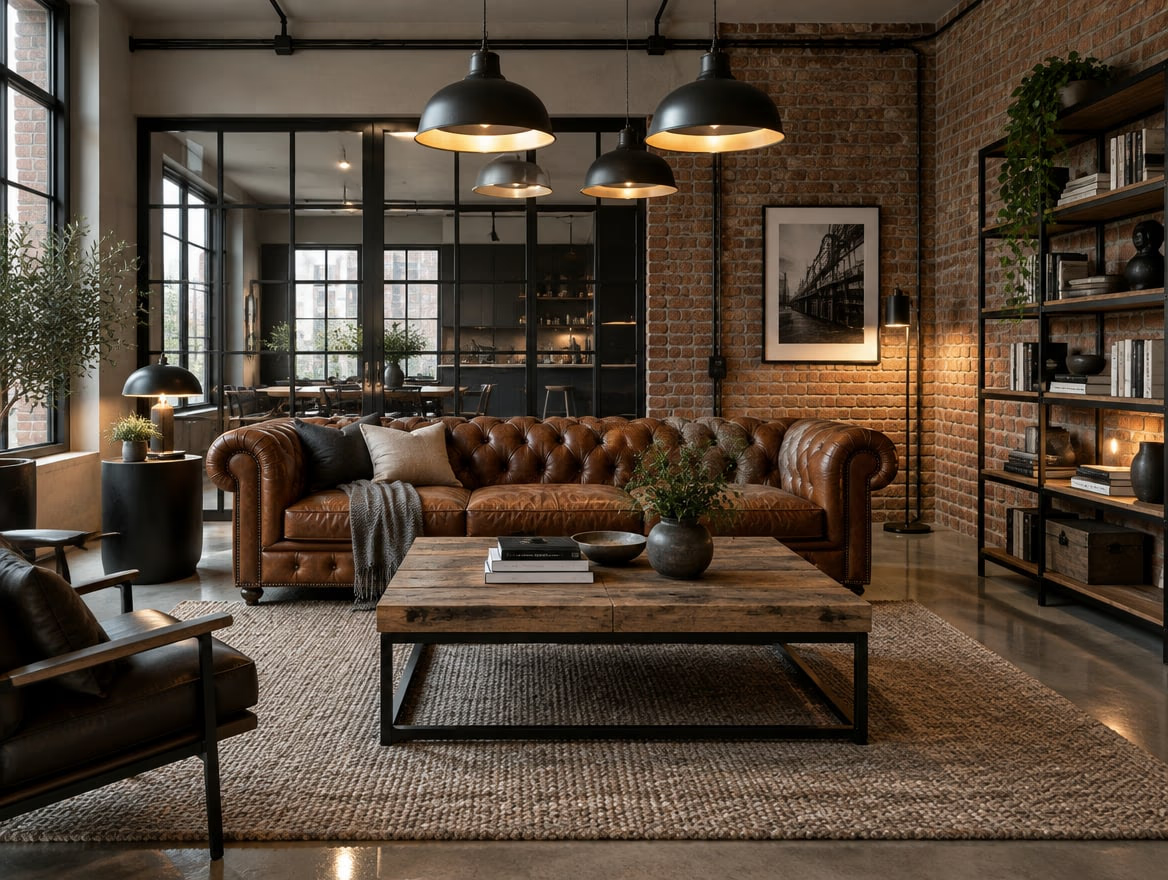
A leather sofa, a reclaimed wood coffee table, metal floor lamps and one brick or concrete wall.
-
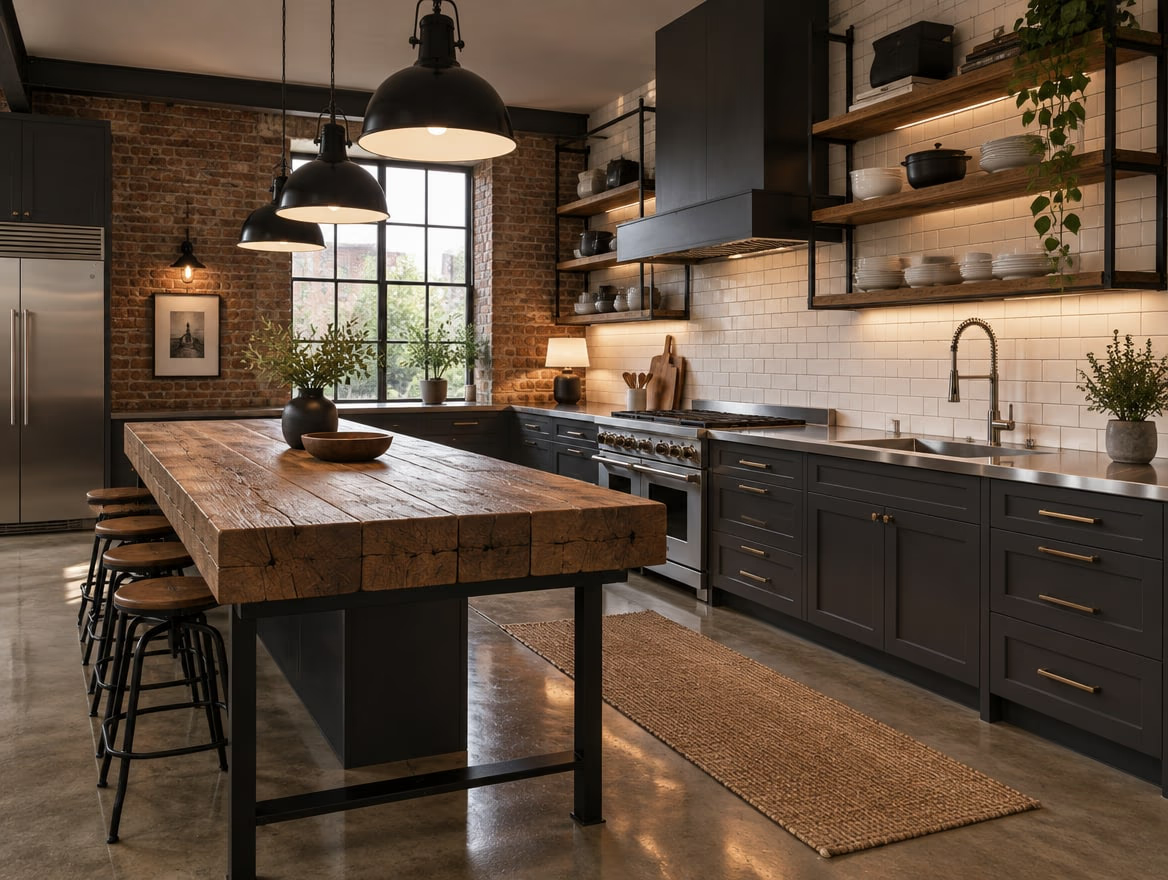
Open metal shelving, a butcher block or concrete countertop and black pendants over the island.
-
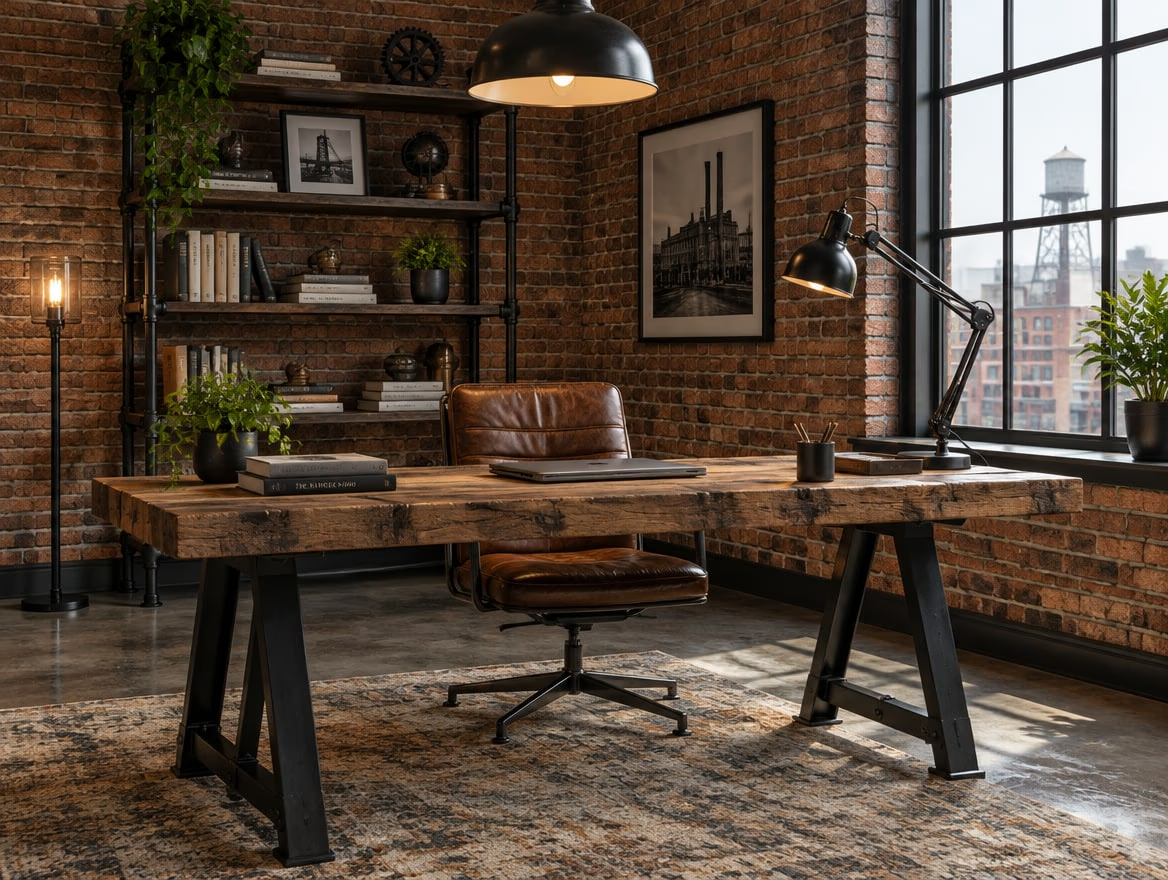
A wood and steel desk, a metal task lamp and open shelving for books.
-
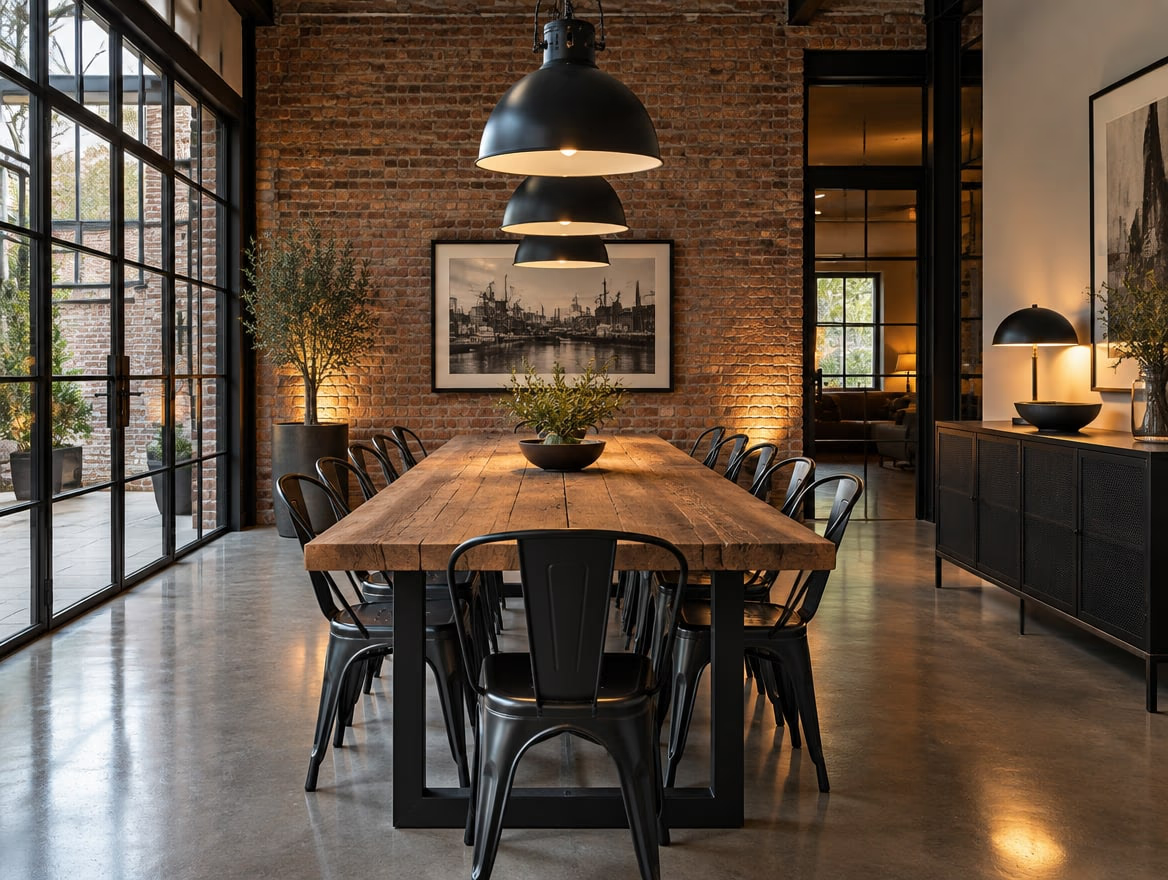
A heavy wood table, metal chairs and a row of pendants with exposed bulbs.
Industrial style questions, answered
Can I get an industrial look without exposed brick?
- Yes. Black metal, dark walls, rustic wood and leather create most of the look. Brick is a nice extra, but it is the most expensive and permanent part, so add it last.
Does industrial style work in a small apartment?
- It can, with a lighter hand. Keep the walls lighter, use black metal for accents and limit dark colors to one wall or a few pieces.
What colors go with industrial design?
- Charcoal, black, warm gray, brick red and natural wood. Cognac leather and olive green work well as accents.
How do I keep industrial style from feeling cold?
- Add soft layers: a large rug, linen curtains, wool throws and warm bulbs. Plants also help by bringing life to the hard surfaces.
What is the difference between industrial and modern design?
- Modern design is clean, smooth and minimal. Industrial design is rougher and more raw, with exposed brick, metal and worn wood. Many homes mix the two.
Styles people compare it with
- Modern interior design Modern interior design is a style built on clean lines, simple shapes, a limited color palette and little to no decoration.
- Dark minimalist interior design Dark minimalist interior design pairs charcoal, deep brown or near-black walls with simple furniture, a small palette and very little decoration.
- Mid-century modern interior design Mid-century modern interior design is a style from roughly 1945 to 1969.
See Industrial on a particular room
See Industrial on your own room.
Try with 2 free designs