Style
Japandi interior design
Japandi mixes the comfort of Scandinavian design with the calm of Japanese interiors. The result is a warm, low, uncluttered room that feels good to come home to. Here is what defines it, and what it looks like on an everyday room.
Try with 2 free designs
What is Japandi interior design?
Japandi interior design is a blend of Scandinavian and Japanese style. It uses low wooden furniture, warm neutral colors, natural materials like oak, linen and ceramic, and plenty of open space. Compared with Scandinavian design, it is warmer, earthier and closer to the floor.
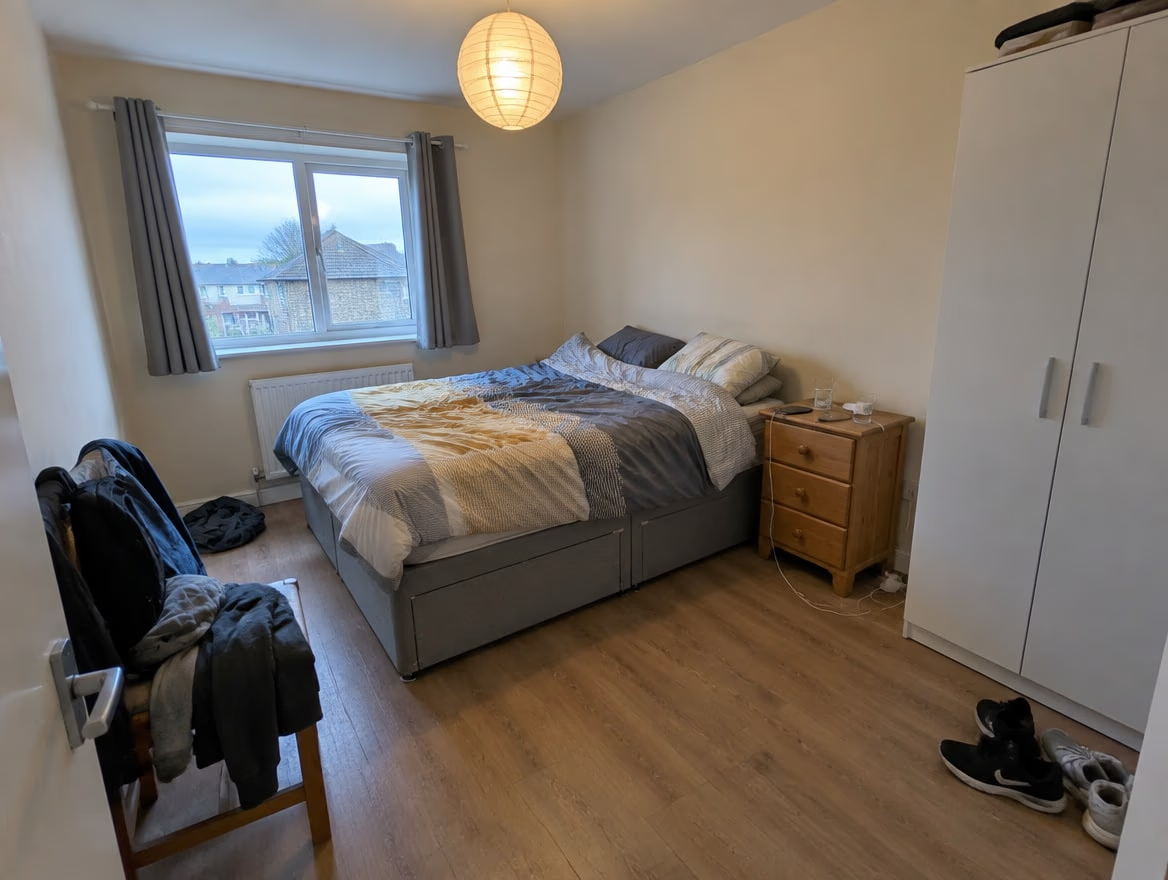
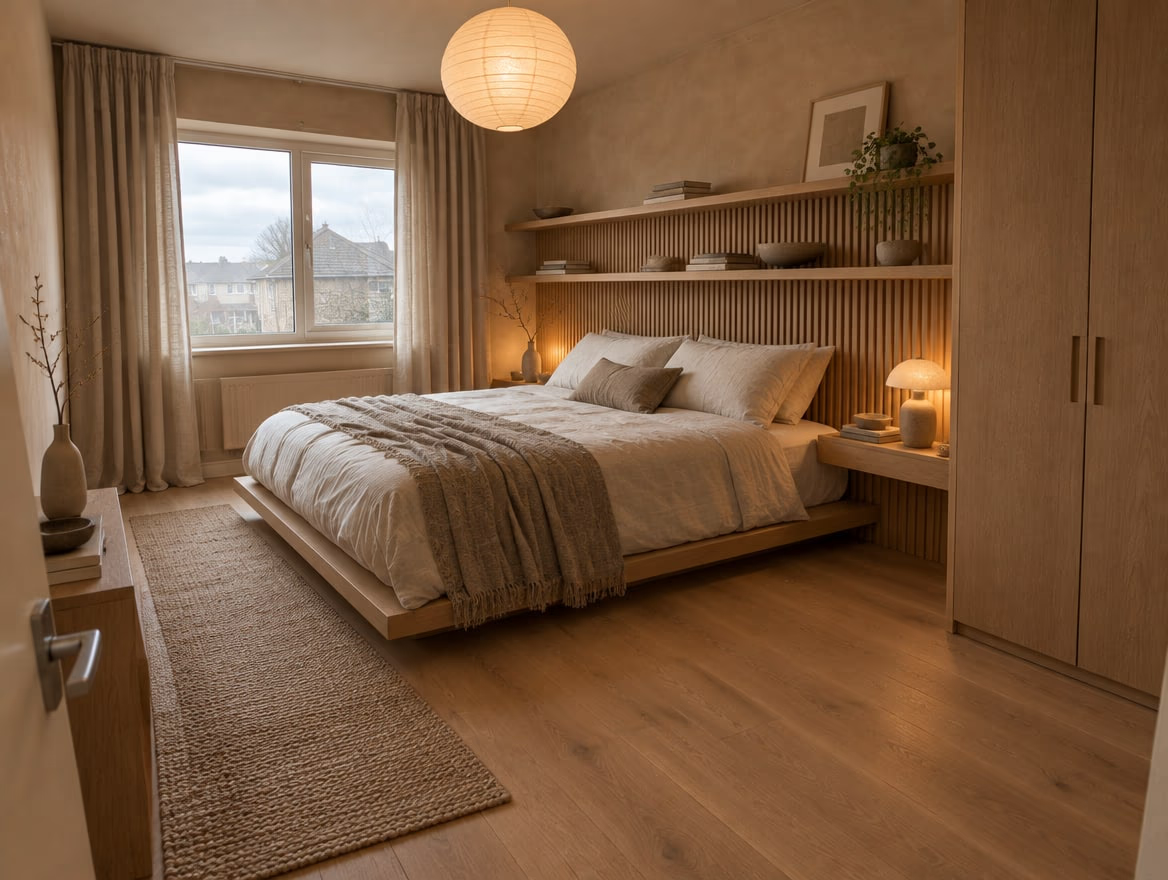
Same walls, same window, same camera. Only the design changed.
Key elements of Japandi design
-
Low furniture
Low beds, low sofas, low coffee tables. Keeping everything close to the floor is the fastest way to make a room feel Japandi, and it makes the ceiling feel higher.
-
Warm neutral colors
Oatmeal, sand, clay and soft greige instead of bright white. The walls stay plain but feel warm, even in a room with little daylight.
-
Natural materials
Oak and walnut, linen, rattan, paper and handmade ceramic. Matte finishes everywhere, nothing glossy or plastic.
-
Open space on purpose
A bare wall, an empty corner, a clear surface. Empty space is part of the design, so every piece you keep has room to breathe.
-
Soft, low lighting
Paper lanterns, floor lamps and warm bulbs. Light comes from the side and from below, rarely from a single ceiling fixture.
- Color palette
- Warm white, oatmeal, sand and greige on the walls. Light to mid-tone wood. Charcoal or black as thin accents. One muted green or rust if you want a touch of color.
- Materials and furniture
- Oak, ash and walnut. Linen, cotton and wool. Rattan, bamboo and paper shades. Handmade stoneware and stone. Low platform beds, slatted benches and simple wooden tables.
- Watch out for
- Clutter. Japandi relies on clear surfaces, so a busy room quickly turns into a plain beige room. Plan closed storage first, then style what is left.
In the app this style is called Japandi.
How to get the Japandi look
-
Clear before you buy
Remove what you do not use and move the rest into closed storage. Japandi starts with less on show.
-
Warm up the walls
Repaint stark white walls in a warm off-white, sand or soft greige.
-
Bring the furniture down
Choose a low bed, a low sofa and a low coffee table in natural wood. Replace one tall piece at a time if the budget is tight.
-
Layer natural textures
Add a linen throw, a wool or jute rug, a paper lamp and one or two handmade ceramics.
-
Preview it on your room
Take a photo of your room and apply the Japandi style in RoomGPT to see the result before you spend anything.
Japandi ideas, room by room
-
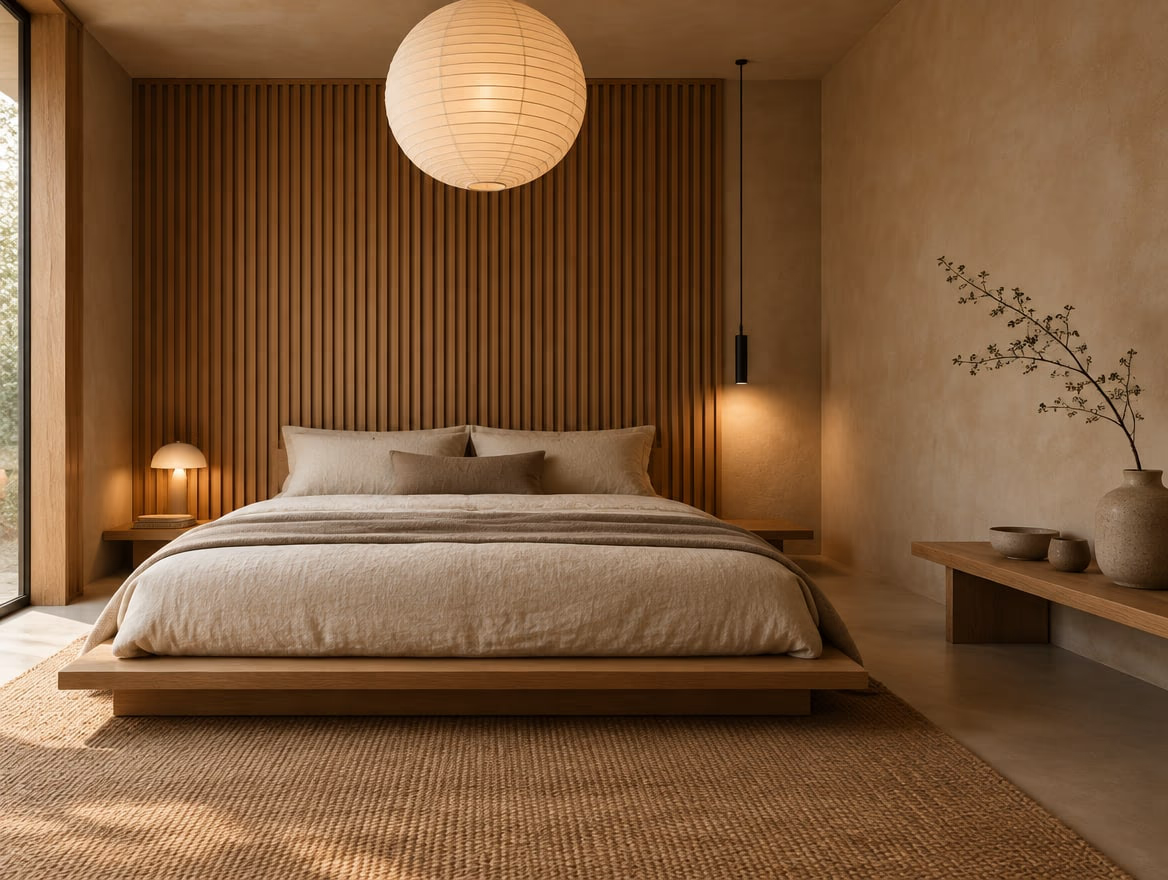
A low platform bed, linen bedding in sand tones and a paper lamp on each side. Nightstands kept almost empty.
-
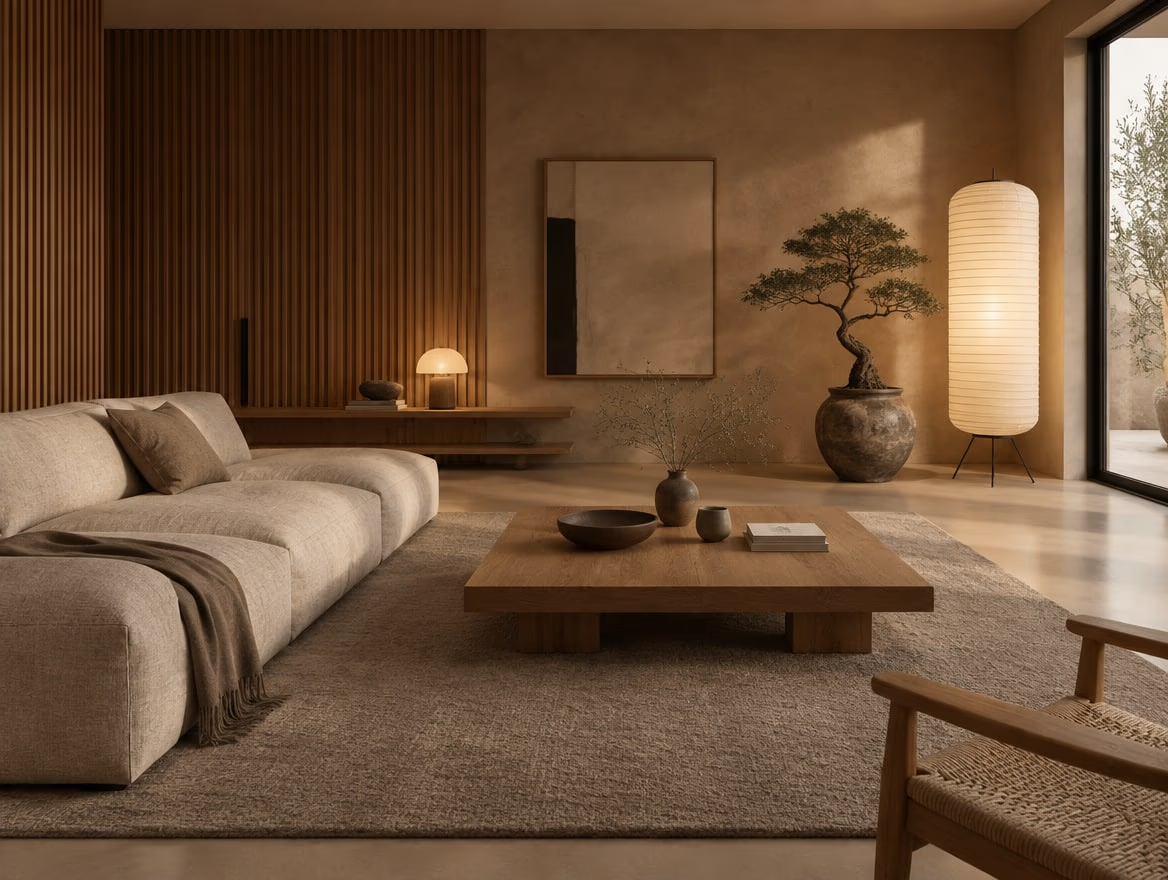
A low sofa in a warm neutral fabric, a solid wood coffee table and one large plant. One wall left bare.
-
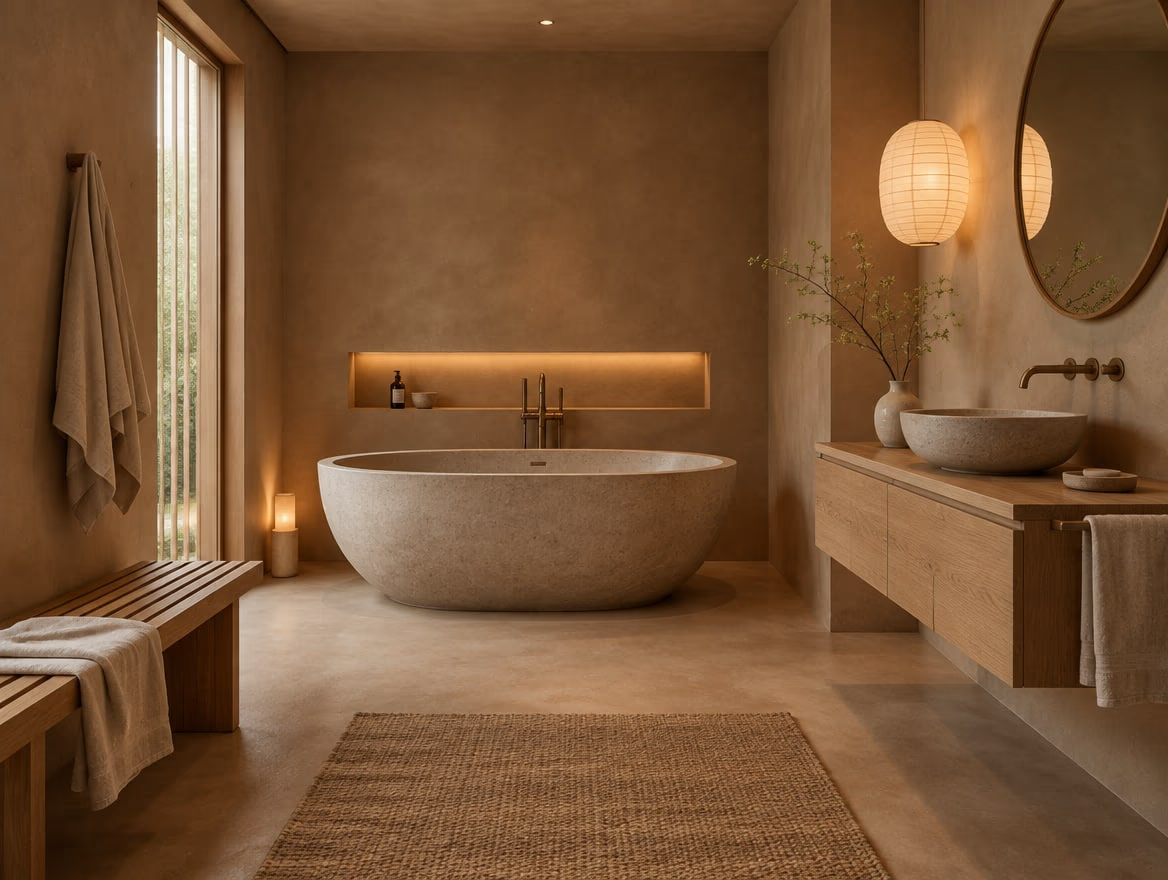
A wood vanity, stone or matte tile and a wooden stool. Products hidden behind doors.
-
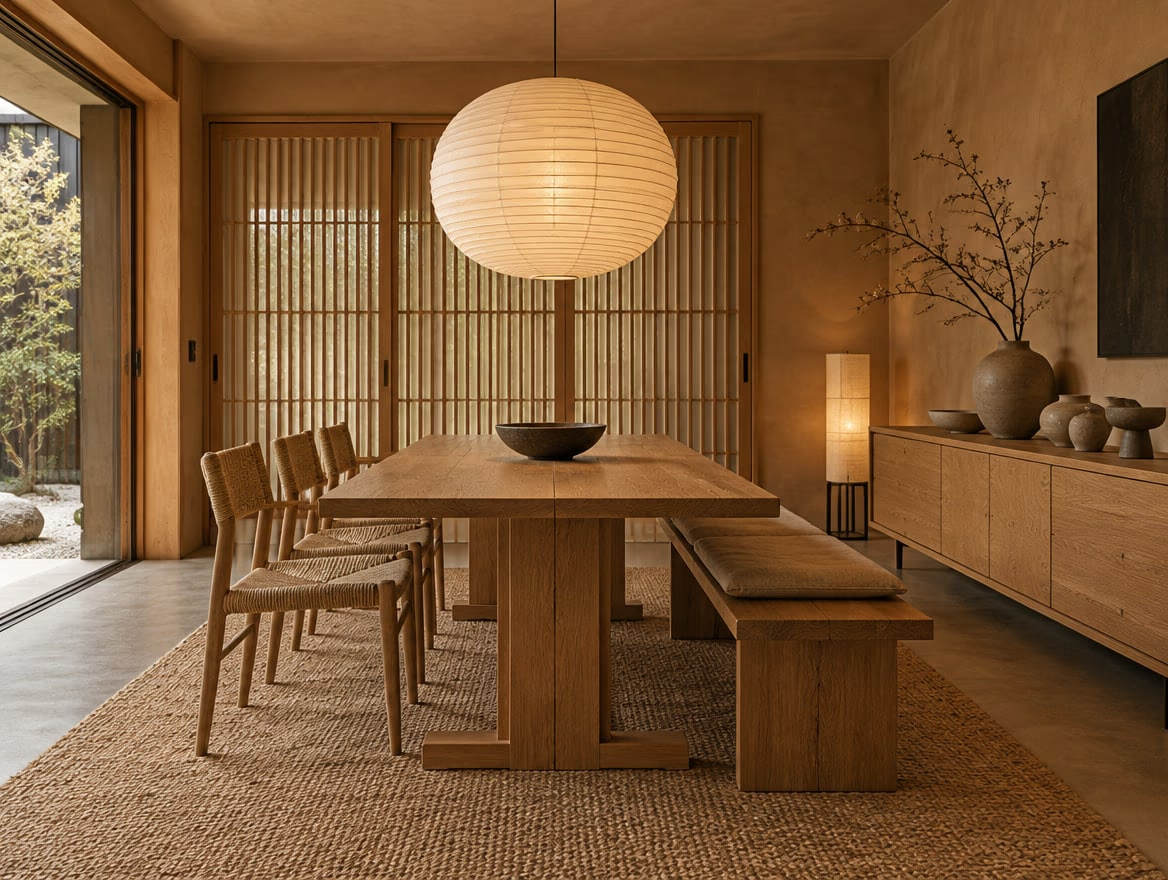
A solid oak table, simple wooden chairs or a bench, and one paper pendant hung low.
Japandi questions, answered
What is the difference between Japandi and Scandinavian design?
- Both use wood, neutral colors and simple shapes. Japandi is warmer and earthier, with sand and clay tones instead of bright white, and its furniture sits lower to the floor. Scandinavian rooms feel light and airy. Japandi rooms feel calm and grounded.
What colors are used in Japandi design?
- Warm neutrals do most of the work: off-white, oatmeal, sand, greige and clay. Wood tones add warmth, and charcoal or black is used for thin accents. If you want color, keep it muted, like sage green or rust.
What furniture is typical of Japandi style?
- Low platform beds, low sofas with wooden frames, simple wooden coffee tables, slatted benches and a few open shelves. Look for solid wood, clean lines and softly rounded edges.
Does Japandi work in a small apartment?
- Yes. Low furniture makes the ceiling feel higher and the simple palette makes the room feel bigger. The key is storage: Japandi only works when most of your things are out of sight.
Is Japandi still in style?
- Yes. It remains one of the most popular interior styles, and because it is built on natural materials and simple shapes, it dates slowly.
Japandi ideas
Styles people compare it with
- Scandinavian interior design Scandinavian interior design is a light-first style: white or off-white walls, pale wood, low furniture on visible legs, and almost no pattern.
- Wabi sabi interior design Wabi sabi interior design is based on the Japanese idea of beauty in imperfection.
- Minimalist interior design Minimalist interior design keeps a room to the essentials: fewer pieces, clear surfaces, closed storage and a very small color palette.
See Japandi on a particular room
See Japandi on your own room.
Try with 2 free designs